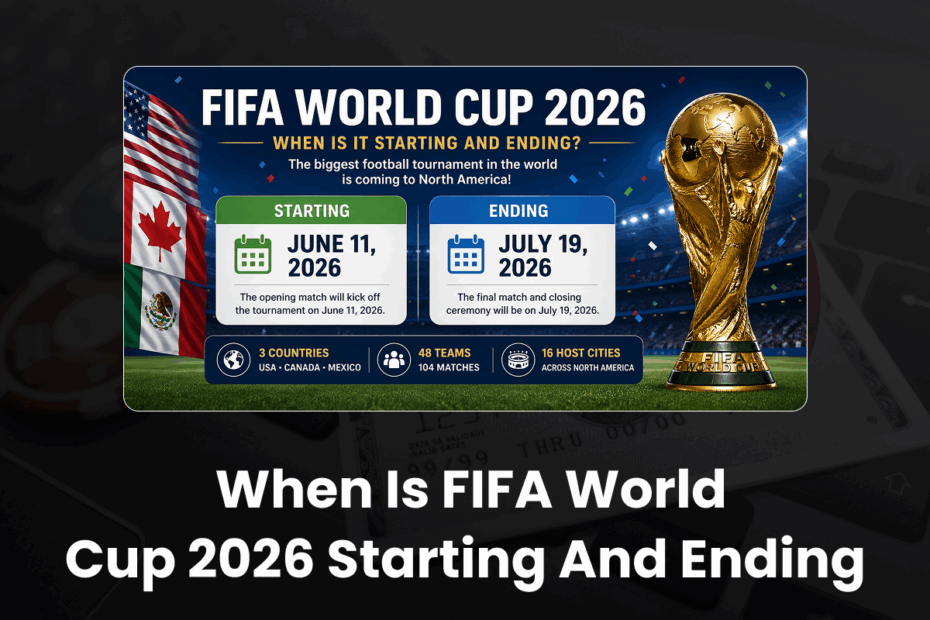
Football fans eagerly await the start date of the FIFA World Cup 2026 because it expands the format to include 48 teams and delivers more exciting matches than ever before. The tournament runs from June 11 to July 19, 2026, across Canada, Mexico, and the United States. This setup creates unique opportunities for players and supporters alike.
The co-hosting arrangement spreads the action across 16 venues, reducing travel pressure on teams while showcasing diverse stadiums and cities. Organizers designed the timeline to balance group stage games with sufficient rest periods before the knockout rounds begin.
Overview of the Tournament Timeline
The FIFA World Cup 2026 schedule is divided into clear phases that keep the excitement building over five weeks. Group stage matches run from June 11 to June 27, 2026. Each of the 12 groups plays three matches per team, which leads to 72 total group games. Knockout stage action starts on June 28 and continues until the final on July 19.
The round of 32 features 16 matches followed by the round of 16, quarterfinals, semifinals, third-place match, and the grand final. This structure gives advancing teams time to recover while maintaining momentum. Rest days and break periods appear throughout the calendar to help players perform at their best. Weekly match distribution spreads games evenly, so fans can follow without missing key moments. Peak match days often fall on weekends, which suits global audiences.
FIFA World Cup 2026 Overall Schedule Overview
| Phase | Start Date | End Date | Number of Matches | Key Highlights |
|---|---|---|---|---|
| Group Stage | June 11, 2026 | June 27, 2026 | 72 | 48 teams, 12 groups |
| Round of 32 | June 28, 2026 | July 3, 2026 | 16 | Single elimination begins |
| Round of 16 | July 4, 2026 | July 7, 2026 | 8 | Last 16 teams compete |
| Quarterfinals | July 9, 2026 | July 11, 2026 | 4 | Top 8 teams |
| Semifinals | July 14, 2026 | July 15, 2026 | 2 | Final four |
| Third Place Match | July 18, 2026 | July 18, 2026 | 1 | Battle for bronze |
| Final | July 19, 2026 | July 19, 2026 | 1 | Champion crowned |
Why Dates Matter for Fans and Players
Fans and players pay close attention to the FIFA World Cup 2026 dates because they shape travel plans, viewing schedules, and team preparation. The spread across three countries means supporters must consider flights, hotels, and local transport well in advance. The timing affects how families and friends gather to watch matches, especially when games occur at odd hours in certain regions.
Players train around the exact calendar to peak at the right moments during the group and knockout stages. Clear dates help everyone avoid last-minute stress and enjoy the atmosphere. Supporters who plan early secure better seats and accommodations while teams optimize their recovery for football betting strategies.
FIFA World Cup 2026 Start Date
The FIFA World Cup 2026 start date falls on Thursday, June 11, 2026. Mexico opens the tournament against South Africa at Estadio Azteca in Mexico City at 3 p.m. local time. This venue holds special history as the only stadium to host three World Cup opening matches. The first matchday includes additional Group A fixtures later that evening.
Fans in different regions adjust their clocks to catch the action live. Early games set the tone for the entire competition and create immediate buzz across social media and news outlets.
Official Opening Match Date
When is the FIFA World Cup 2026? The official opening match of the FIFA World Cup 2026 takes place on June 11, 2026. Mexico plays South Africa in Group A at the iconic Estadio Azteca. This clash marks the beginning of the 104-match journey and draws massive global attention. Hosts Mexico carry the weight of home support while South Africa aims to make a strong statement. The match kicks off the group stage and sets expectations for the expanded 48-team format.
Opening Ceremony Details
When is the FIFA World Cup opening ceremony 2026? The opening ceremony for the FIFA World Cup 2026 happens on June 11, 2026, ahead of the Mexico versus South Africa match. Organizers plan cultural performances that celebrate the three host nations and the spirit of football. Fans witness colorful displays, music, and messages of unity at Estadio Azteca. The ceremony lasts around 30 minutes and builds excitement before the first whistle. Many viewers tune in early to enjoy this festive start to the tournament.
FIFA World Cup 2026 End Date
The FIFA World Cup 2026 end date is Sunday, July 19, 2026. The final match takes place at the New York New Jersey Stadium at 3 p.m. local time. Two teams battle for the ultimate prize in front of a capacity crowd and billions watching worldwide. This date caps 39 days of intense competition and crowns the champion of the 23rd edition of the tournament.
Final Match Date and Venue
The FIFA World Cup 2026 final occurs on July 19, 2026, at the New York New Jersey Stadium in East Rutherford, New Jersey. This venue, also called MetLife Stadium, hosts the climax of the competition with a 3 p.m. kickoff. The stadium offers modern facilities and a large seating capacity, which suits such a high-profile event. The winning team lifts the trophy in a memorable celebration that concludes the tournament.
| Event | Date | Venue | City / Country | Kickoff Time (Local) | Special Note |
|---|---|---|---|---|---|
| Opening Match | June 11, 2026 | Estadio Azteca | Mexico City, Mexico | 3:00 PM | Historic third opening match |
| Opening Ceremony | June 11, 2026 | Estadio Azteca | Mexico City, Mexico | Before match | Cultural celebration |
| Final Match | July 19, 2026 | NY NJ Stadium | East Rutherford, USA | 3:00 PM | Capacity over 82,000 |
Importance of Final Match Timing
The timing of the FIFA World Cup 2026 final on July 19 allows fans across continents to watch comfortably. A 3 p.m. local start translates to evening hours in Europe and morning or afternoon slots in Asia, depending on the exact zone. This slot maximizes global viewership and creates shared moments for supporters everywhere. Players also benefit from the schedule as it follows sufficient rest after the semifinals.
Complete FIFA World Cup 2026 Schedule Timeline
The complete FIFA World Cup calendar 2026 covers the group stage from June 11 to 27, the round of 32 from June 28 to July 3, the round of 16 from July 4 to 7, the quarterfinals from July 9 to 11, the semifinals on July 14 and 15, the third-place match on July 18, and the final on July 19. This breakdown helps fans track progress and plan accordingly. The 104 matches unfold across 16 cities, which adds variety to the experience.
| Stage | Dates | Matches | Teams Involved | Advancement Rule |
|---|---|---|---|---|
| Group Stage | June 11 to June 27 | 72 | All 48 teams | Top 2 per group + 8 best 3rd places |
| Round of 32 | June 28 to July 3 | 16 | 32 teams | Winners advance to Round of 16 |
| Round of 16 | July 4 to July 7 | 8 | 16 teams | Winners to Quarterfinals |
| Quarterfinals | July 9 to July 11 | 4 | 8 teams | Winners to Semifinals |
| Semifinals | July 14 and 15 | 2 | 4 teams | Winners to Final |
| Third Place | July 18 | 1 | 2 teams | Bronze medal match |
| Final | July 19 | 1 | 2 teams | World Champion crowned |
Group Stage Dates
The FIFA World Cup group stages 2026 will run from June 11 to June 27, 2026. Teams play three matches each in their groups of four. Matchdays spread across three windows: June 11-17, June 18-23, and June 24-27. The top two teams from each group, plus the eight best third-placed sides, advance to the knockout stage. This phase features 72 matches and builds rivalries early in the tournament.
Knockout Stage Periods
FIFA World Cup 2026 matches set to begin on June 28, 2026, with the round of 32. Single-elimination games continue through the round of 16, quarterfinals, semifinals, and final. Every match carries high stakes as losers exit the competition.The format rewards consistent performance while allowing surprises that make the World Cup special.
Rest Days and Break Periods
Rest days and break periods appear between group matches and before knockout rounds to help players recover. Organizers inserted these gaps to reduce fatigue in the expanded tournament. Teams use the time for training, tactical adjustments, and medical care. Fans appreciate the breathing room that prevents match overload.
FIFA World Cup 2026 Match Calendar Breakdown
The FIFA World Cup calendar 2026 breakdown shows a balanced distribution over 39 days. Group games dominate the first 17 days while knockout matches fill the remaining period. Weekly match distribution keeps interest high without overwhelming any single day. Peak match days often include multiple fixtures that create full days of football action.
| Week | Dates | Expected Matches | Focus Area | Typical Peak Days |
|---|---|---|---|---|
| Week 1 | June 11 to June 17 | 24-28 | Opening groups | Weekends |
| Week 2 | June 18 to June 23 | 24 | Mid-group battles | Mid-week and weekends |
| Week 3 | June 24 to June 27 | 20 | Final group deciders | Last three days |
Peak Match Days
Peak match days in the FIFA World Cup 2026 feature several games scheduled across different venues and time slots. These days deliver non-stop excitement, especially during weekends. Supporters choose which matches to watch based on their favorite teams or time availability. The variety adds depth to the overall tournament experience.
Time Zones and Match Timings
Time zones and match timings vary because of the spread across North America. Most games use local host city times, which range from Pacific to Eastern zones, with some in Central Mexico time. Fans in Europe often watch evening or late-night broadcasts while Asian audiences catch early morning or afternoon slots. Broadcasters provide convenient conversions to help viewers plan.
Match Timing for USA, Europe, and Asia
Match timing for the USA, Europe, and Asia requires simple adjustments. A 3 p.m. Eastern Time game in the USA becomes 8 p.m. in the UK and around 12:30 a.m. the next day in India. European fans enjoy many matches in prime evening hours, while Asian supporters may wake early for key games or follow highlights. The schedule accommodates major regions reasonably well.
Best Time to Watch Matches
The best time to watch matches depends on your location and preferred teams. Weekend afternoon slots in host cities often suit families, while evening games attract larger crowds at venues. Many fans set reminders or use apps that convert times automatically. Flexible viewers catch replays or condensed highlights when live viewing is not possible.
Key Dates to Remember for FIFA World Cup 2026
Key dates to remember for FIFA World Cup 2026 include the June 11 opener, the end of group stage on June 27, start of knockouts on June 28, semifinals around July 14-15, and the final on July 19. These milestones help fans track the journey from group excitement to the ultimate showdown.
Opening, Semi-Finals and Final Dates
Opening, semi-finals and final dates stand out clearly. The tournament opens on June 11, semi-finals occur on July 14 and 15, and the final takes place on July 19, 2026. These dates mark the emotional peaks of the competition and often become topics of global discussion. For a broader look at the FIFA World Cup 2026 dates, teams, format, and host details, fans can stay updated through official reports.
Important Deadlines and Events
Important deadlines and events include ticket sales phases that began in 2025 and continue into 2026. Fans monitor official channels for updates on hospitality packages and travel offers. Other milestones involve team preparations and broadcast arrangements that build toward the big kickoff.
How the FIFA World Cup 2026 Schedule Affects Fans
The FIFA World Cup 2026 schedule affects fans by influencing vacation plans, work schedules, and social gatherings. Many supporters book time off around key matches or organize viewing parties with friends. The multi-country format encourages some fans to travel between venues, which adds adventure to their experience. Others stay home and enjoy the event through television and digital platforms.
Travel Planning Based on Match Dates
Travel planning based on match dates requires early action. Fans who want to attend games in person should check flight availability and hotel rates months ahead of time since demand rises sharply near big matches. Many supporters also look up the FIFA World Cup 2026 stadiums and venues to decide which cities to visit. Cities near multiple venues offer convenient bases for those attending several games. Budget travellers compare options across the three host countries to find the best value.
Ticket Booking Timing
Ticket booking timing plays a crucial role for fans who hope to see matches live. Official sales occur in phases through the FIFA website with random selection draws and first-come, first-served options. Once the FIFA World Cup 2026 qualified teams list is finalized, interest in specific tickets is expected to surge. Early applicants increase their chances of securing seats, especially for popular fixtures. Supporters should register promptly and watch for updates on remaining tickets.
Conclusion
The FIFA World Cup 2026 delivers an unforgettable football journey from June 11 to July 19 across three exciting host nations. Fans gain clear dates for every stage, which makes planning simpler and more enjoyable. This expanded tournament with 48 teams and 104 matches creates new stories and memories for players and supporters worldwide. The schedule balances competition with rest while offering convenient viewing options for different time zones. Mark these dates and prepare to celebrate the beautiful game at its biggest stage yet.
Whether you watch from home or travel to the venues, the 2026 World Cup promises thrilling action and shared passion for football only on About96.
