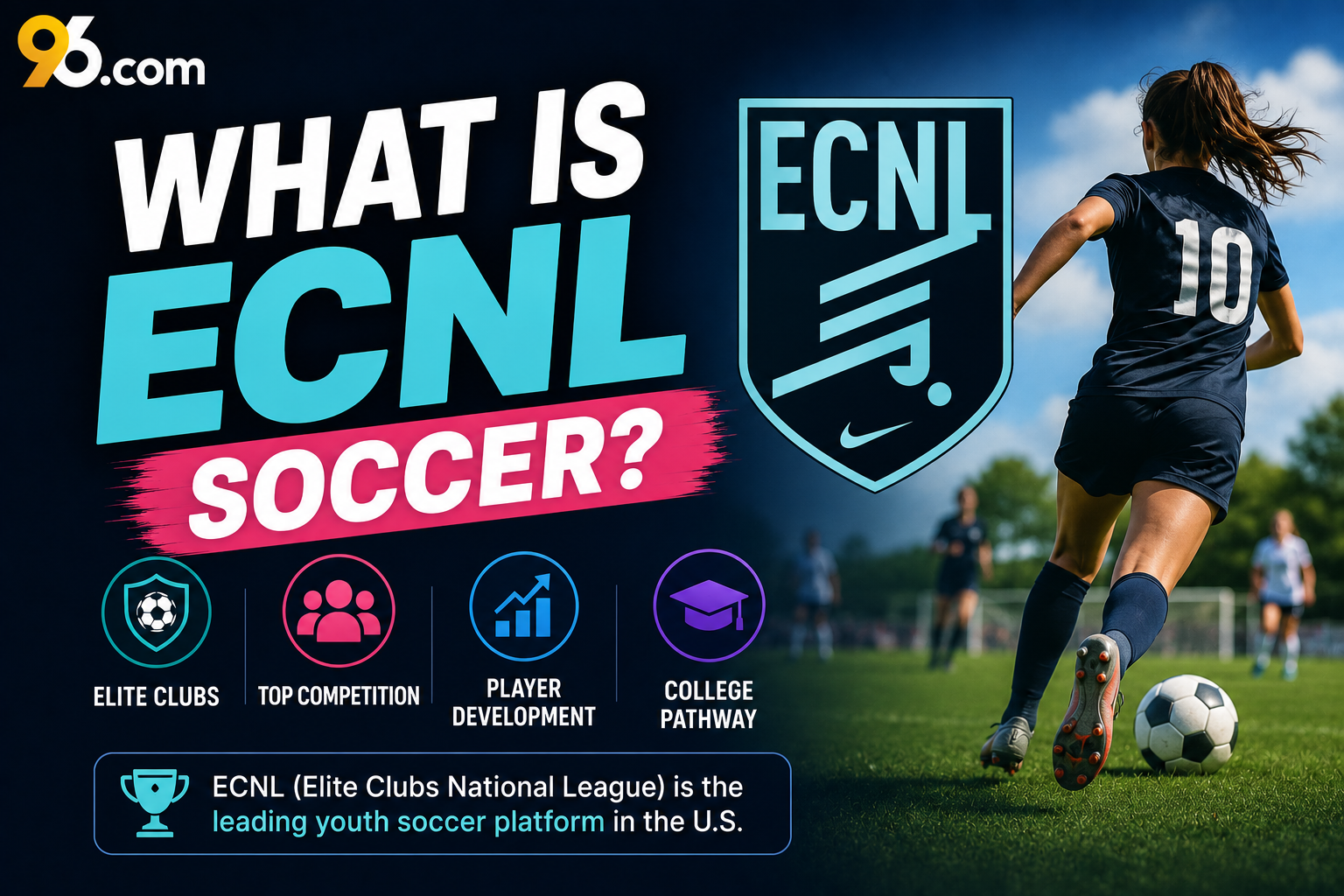
In the United States, ECNL soccer is a top-tier youth soccer competition. The primary purpose of this competition is to develop talented athletes and provide them with exposure to college scouts. This blog on 96 APK will give you all the details about what ECNL is; keep following this platform for more football betting and soccer-related topics.
What Does ECNL Stand For in Soccer?
In soccer, ECNL stands for ‘Elite Clubs National League’; it is a competitive youth soccer competition based in the United States of America. Let us go through and understand what is there free ECNL soccer, and how it works.
How ECNL Started
The ECNL was founded in 2009 by a group of soccer clubs, tired of the existing system and wanting to lay the foundations for something new.
The aim was to create a meaningful competition with competitive games; the organisation gave the clubs the autonomy to decide their own standards.
When it was formed in August 2009, it was a girls-only league with 40 founding clubs.
Purpose of the ECNL League
ECNL aims to provide a competitive platform and increase the standard of youth soccer in the United States. They have rigorous coaching standards and make sure the players get exposure to college and professional scouts.
How ECNL Soccer Works
The ECNL is an invite-only elite Soccer league in the United States of America.
Here’s a breakdown of how the league functions:
| Structure and Competition Level | Postseason and Championship | College and Scouting | Financial and Committal Aspects | |
| Teams compete in geographically based regions, against other top clubs. Most of the regular season games are played here. | The qualifications are based on the team standings in the regional conferences. | The ECNL is considered the best recruiting system in the U.S. | Being a national-level sport, a year-round commitment is important. | |
| They host major tournaments across the country, allowing teams from different conferences to play each other. | Playoffs feature more than a hundred teams, with the best advancing to the finals for a National Championship. | The league features a talent identification program to select elite players for national training camps and higher developmental opportunities. | The participants have to bear high costs, including club fees, training and travel costs for out-of-state activities. |
Age Groups and Team Structure
The ECNL features a total of 7 age groups across the competition. These are single age divisions, from U13 to U17, and the U18/U19 groups are combined.
Here’s the team structure of ECNL:
- Each club has to field their top-tier team across all primary age groups.
- A maximum of 30 players is allowed per season.
- The teams are divided into 9 to 10 regional conferences to minimise travelling and guarantee a highly competitive season.
- The regular season leads to the Championship League, which leads to the ECNL National finals.
ECNL Regular Season and Events
The regular season of ECNL starts in late summer and runs through spring. Throughout this time, it features nearly 40 events across both the ECNL and ECNL Regional League.
- The competitions are held between local conferences (Midwest, Northeast, Southwest, etc.)
- ECNL hosts major tournaments throughout the season, including recruitable events, where teams from across the country gather.
- The season ends with the ECNL playoffs, followed by the ECNL National Finals.
Travel and Competition Format
The ECNL competition is divided into multiple tiers:
1. | ECNL National | The top-tier youth competition, with college exposure. |
| 2. | ECNL Regional League (ECRL) | A local tier for clubs needing development, minus the cross-country travelling. |
| 3. | Pre-ECNL | This is for the development of (usually U9-U12 group) focused on the game, with minimal travelling. |
Is ECNL the Highest Level of Youth Soccer?
Yes, the ECNL is considered the highest level of youth soccer in the United States, especially for girls. For boys, it is equal to the MLS NEXT.
ECNL vs MLS NEXT
MLS NEXT is considered to be a direct road to professional soccer, while ECNL focuses more on collegiate recruitment and exposure.
Here’s a breakdown of the differences between the two:
| MLS NEXT | ECNL | |
| Primary Goal | Professional development and a direct road to MLS academies and professional contracts. | Provides college placement and a national showcase environment. |
| Rules | Enforces the substitution rules set by US Soccer. | More flexible, allows participation in high school soccer, and flexible substitution rules to give more game time exposure in front of college coaches. |
| Cost | MLS academies are subsidised or free, but the MLS NEXT clubs still charge fees. | Families are responsible for club fees, coaching fees as well as the travel costs. |
ECNL vs High School Soccer
Compared to ECNL, high school competitions are rarely attended by scouts due to the short competition length and different levels.
College Recruiting Opportunities
The showcase tournaments held by ECNL are attended by NCAA Division 1, 2, and 3 coaches and scouts. This leads to students being recruited for college soccer based on their skills.
Who Can Join ECNL Soccer?
While the ECNL doesn’t directly accept registrations, age groups between U13-U19 can participate, and many clubs accept the Pre-ECNL squads for kids.
Tryouts and Selection Process
The tryouts are typically conducted in early May (following the league rules), and it focuses on assessing the physical, tactical and psychological abilities of the players.
Here’s a breakdown of the tryout process:
- Players have to register online before the time and the eligibility is determined by the birth year, rather than the current school grade.
- The tryouts last for 2-3 sessions, with each one lasting for 60 to 90 minutes. Players undergo technical drills and small-sided games.
- Players are evaluated based on game awareness, technical abilities, physical abilities and psychological mindset.
- Rules prevent current ECNL and ECRL players from attending tryouts at other ECNL clubs until the official window opens in May.
Here is a breakdown of the selection process after the tryouts:
- The players are notified through email or the online portal within a few days.
- The selected players are placed on the premier ECNL team. The ones who aren’t selected are recommended to the club’s lower-tier teams.
Skill Level and Player Expectations
Because this is a highly competitive league, elite skill levels are expected from the players.
| Skill Level | Player Expectations |
| Players are expected to have a flawless first touch and perform well under pressure. | Because the league is competitive, players are expected to recover from mistakes quickly, maintain composure, and handle pressure. |
| They should also be fast, both physically and mentally, with good game awareness and decision-making. | Everyone on the roster is talented, and why they’re on there in the first place. So one thing to keep in mind is that playing time isn’t guaranteed; you earn it. |
How Much Does ECNL Soccer Cost?
ECNL costs between $5,000 and $15,000+ for a year; this cost includes club fees plus other costs.
Club Fees and Travel Expenses
Club fees cost between $2,000 and $4,500 per year.
While travel costs around $2,000 to $6,000+ each year, these costs include hotels, meals, and flights.
Scholarships and Financial Support
ECNL doesn’t directly offer scholarships and financial support, but their member clubs do offer individual-based financial aid, travelling and coaching costs.
Because the program can be expensive, each club has its own fee assistance and scholarship funds to assist.
Why Many Players Choose ECNL
Players prefer the ECNL for its college recruitment process, competitive environment and flexible high school participation.
Competitive Environment
It is considered one of the best youth soccer competitions. It is highly competitive, with year-round training and travelling commitments. Players have to be mentally, physically and technically strong.
Exposure to College Scouts
They host major showcase events, which are often attended by NCAA Division 1, 2, and 3 coaches. Players can get selected from here based on their performance and skills.
Professional Development Pathways
ECNL helps athletes join the professional leagues, such as MLS or NSWL, through performance tracking and talent spotting.
Conclusion:
ECNL is not your local competition; it is a highly competitive, invite-only league that requires physical and mental toughness to be committed. It provides players with college exposure, and they can get picked by top-tier coaches based on their performance. Make sure to keep following 96 bet for all the soccer betting-related and football-related topics, and rewards.
FAQs
Is ECNL soccer better than high school soccer?
Yes, ECNL is better than high school soccer as it provides a higher level of competition, coaching and better college scouting exposure.
At what age can players join ECNL teams?
Players can join the official ECNL league from the ages of U13 to U19. Some clubs offer ‘Pre-ECNL’ development programs for U11 and U12 kids.
Do ECNL players get recruited for college soccer?
Yes, so many ECNL players get recruited for college soccer; it is one of the unique selling points of the league.
How competitive are ECNL soccer tryouts?
The tryouts are very competitive; players have to give their absolute best during the tryouts, as roster spots are also limited.
Can players move from ECNL to professional academies?
Yes, players can move to professional academies through ECNL. Their matches are often used as a scouting ground by professional academies such as MLS and NWSL clubs.
