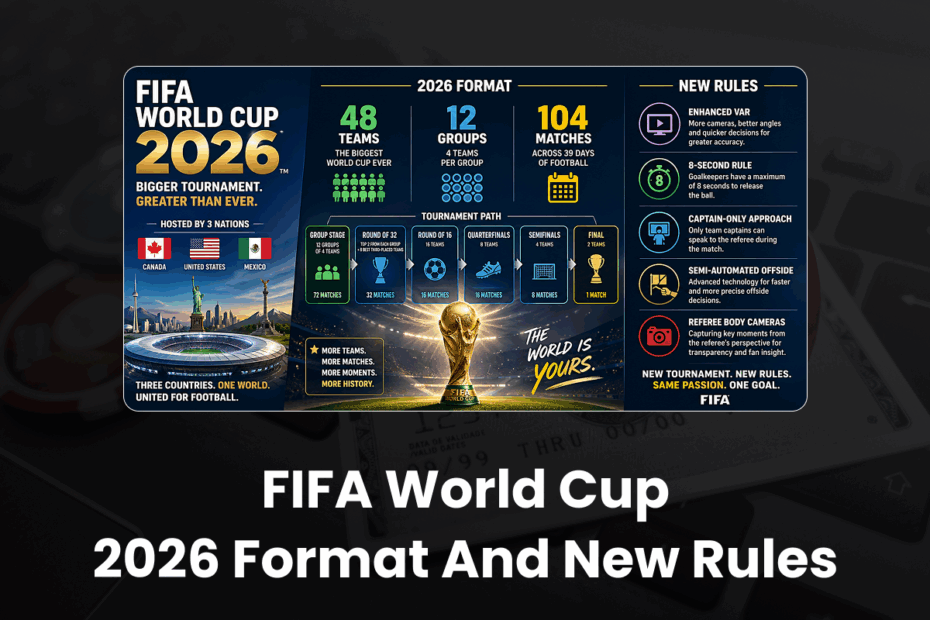
FIFA decided to shift from the classic 32-team setup to a more inclusive model for the upcoming 2026 edition. This evolution ensures more nations participate while providing players and users with a massive, extended global football schedule. This blog on the 96 app explains all the key details related to FIFA WC 2026 format, new rules, teams, venues and much more.
Understanding the 2026 World Cup Expansion
The most significant update involves the expansion of the participating field and the total match count across North America for the first time. Officials settled on 12 groups of four teams each to maintain competitive integrity throughout the initial phase of the tournament. The 2026 World Cup expansion allows for 48 nations to compete, which is a significant jump from the previous 32-team structure.
Detailed 2026 World Cup Teams Analysis
Expanding the field to 48 teams allows for a broader representation of global talent and gives smaller nations a realistic shot at glory. This growth means the tournament will now feature 104 matches in total, compared to the previous 64-game structure used previously.
Structure of the 2026 World Cup Groups
- The 48 2026 World Cup teams are divided into 12 distinct groups of four teams each to ensure high-stakes competition.
- Every team plays three group matches in a round-robin style to determine the final standings before the knockout phase begins.
- The top two teams from each group automatically qualify for the first knockout round, ensuring quality play for all users.
- The eight best third-placed teams also advance to ensure a full bracket of 32, keeping the 2026 World Cup groups intense.
Also Read: Top FIFA World Cup 2026 Host Cities – What Fans Need to Know
Match Format and Tournament Structure
The tournament structure now includes an additional knockout round to accommodate the higher number of teams qualifying from the expanded group stages. This ensures that the road to the final is more challenging and requires greater depth from every squad competing.
Key World Cup 2026 Dates and Schedule
The knockout path begins with a brand-new Round of 32, doubling the number of elimination games from 16 to 32 for viewers. To reach the trophy, the finalists must now navigate eight matches instead of the traditional seven, pushing the physical limits of players.
- Round of 32: 32 teams compete in single-leg matches to reach the final 16.
- Round of 16: The winners move to the classic 16-team bracket for the quarter-finals.
- Quarter-finals: The final eight battle for a spot in the semi-finals across massive stadiums.
- Semi-finals: Four teams fight for the chance to play at the 2026 World Cup final venue.
Host Locations and Stadium Details
The 2026 World Cup host cities are spread across three nations, providing a diverse range of climates and conditions for the participating squads. These venues have been selected for their world-class facilities and capacity to handle the massive influx of global football fans.
Scouting the 2026 World Cup Host Cities
The tournament will be hosted across 16 different locations in Canada, Mexico, and the United States to celebrate the sport. Each of the 2026 World Cup host cities brings a unique atmosphere, from the high altitudes of Mexico to coastal stadiums. FIFA confirmed that the 2026 World Cup final venue will be MetLife Stadium in East Rutherford, providing a massive stage. These stadiums will host the 104 matches, ensuring that the World Cup 2026 format reaches more live spectators than ever before.
How the New Format Impacts Strategy
Coaches must now focus on squad rotation more than ever because the journey to the final involves an extra match in the knockouts. Teams with deeper benches will likely find more success as the tournament progresses and fatigue begins to affect the professional players.
| Confederation | Direct Slots | Play-off Slots | Total Potential |
| AFC (Asia) | 8 | 1 | 9 |
| CAF (Africa) | 9 | 1 | 10 |
| CONCACAF (North) | 6 (3 Hosts) | 2 | 8 |
| CONMEBOL (South) | 6 | 1 | 7 |
| OFC (Oceania) | 1 | 1 | 2 |
| UEFA (Europe) | 16 | 0 | 16 |
Scheduling the 2026 World Cup Schedule
The expanded 2026 World Cup schedule is designed to maximize recovery time for players while offering fans a non-stop festival of football. Matches will be grouped in regional clusters to minimize the travel burden on teams moving between the different host nations.
Breaking Down the World Cup 2026 Dates
- The opening match takes place at the iconic Estadio Azteca, marking the official start of the World Cup 2026 dates.
- The tournament spans a 39-day window, making it the longest and most comprehensive edition in the history of the sport.
- The 2026 World Cup schedule features up to six matches per day during the peak of the expanded group stage.
Predictions on the New Knockout Rules
The added Round of 32 introduces more opportunities for upsets where underdog teams can defeat established footballing giants in a one-off match. Players will need to peak at the right time to survive the grueling schedule and reach the final on July 19.
Comparison of Tournament Structures
The 2026 edition is nearly 40% larger in terms of match volume than any previous tournament held in football history. While the 32-team era was beloved for its symmetry, the 2026 World Cup expansion offers a more diverse global festival.
| Feature | 2022 Format (Qatar) | World Cup 2026 Format |
| Total Teams | 32 | 48 |
| Total Matches | 64 | 104 |
| Tournament Duration | 29 Days | 39 Days |
| Groups | 8 Groups of 4 | 12 Groups of 4 |
| Knockout Rounds | 4 Rounds | 5 Rounds |
| Final Venue | Lusail Stadium | MetLife Stadium |
Conclusion: Preparing for the 2026 Edition
The 2026 tournament marks a bold new chapter that prioritizes global inclusion and an unprecedented volume of high-stakes football for everyone. Every stadium provides a different narrative, from the high-altitude games in Mexico City to the coastal conditions in Vancouver and Miami. These changes ensure that the World Cup 2026 format remains the most prestigious and widely viewed sporting event for all.
For all the participants, this expanded format promises a summer of endless action and new records that will last forever. This massive expansion reflects the growing appetite for football in every corner of the world and across the three hosts. Enjoy all the action of this FIFA World Cup 2026 on 96 game.
