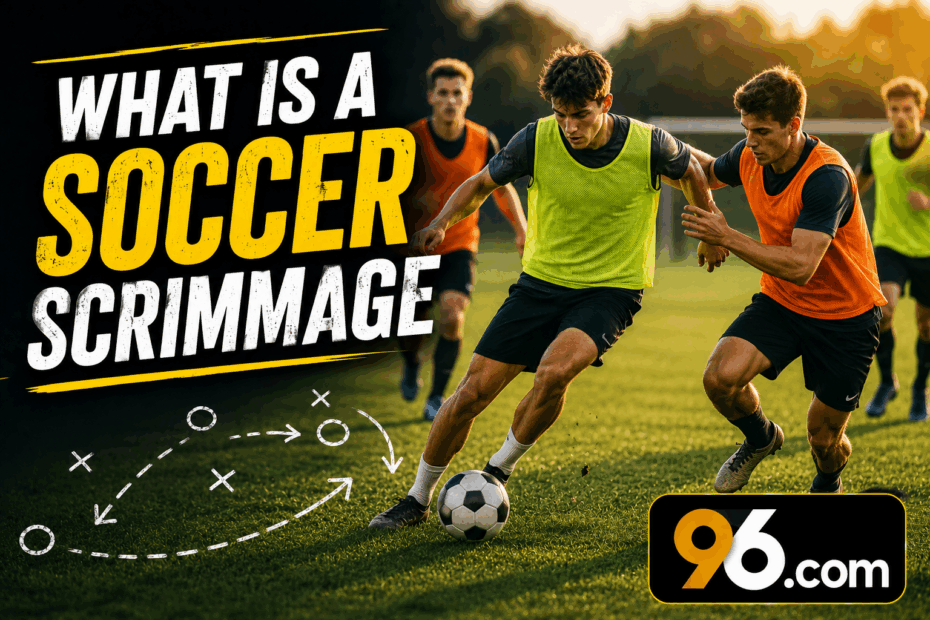
Hey, soccer fans, let us get started with another superb topic for you. A soccer scrimmage is an informal practice match in which teammates play against each other or against a nearby team. It looks like a real game, but it has no official points, referees, or records. It is a tool coaches use to test tactics and improve skills.
Keep reading this blog on 96 APK for what is scrimmage in soccer, the best football betting tips and soccer betting strategies.
The Meaning of a Scrimmage in Soccer
A soccer scrimmage is a practice game that mimics a real match, allowing players to build fitness and try new tactics without competitive pressure.
How Scrimmages Differ From Official Matches
Official matches have strict rules, independent referees, and final scores that count toward league standings. If you lose, you drop points. A scrimmage has none of that stress. The coaching staff usually refs the game. They can change the rules on the spot, like shortening halves or letting tired players rest and return to the game later.
Why Coaches Use Scrimmages During Training
Coaches use these matches because simple drills can only teach you so much. Players need to practice their skills against real defenders who are actively trying to steal the ball. During a scrimmage, a coach can pause the action at any moment. They can correct a player’s position, explain a mistake to the whole team, and then restart play right away.
What Usually Happens During a Soccer Scrimmage?
During a scrimmage, players practice real-game moments while coaches try out new lineups and guide players’ movements in a relaxed, controlled setting.
Practice Game Scenarios
Coaches often create specific challenges rather than just letting players kick the ball around. For example, a coach might split the squad and tell one group, “You are losing 1-0, and there are only five minutes left.” This forces the team to attack with speed. It teaches players how to handle stressful moments before they happen in a real tournament.
Testing Team Formations and Strategies
Before trying a new strategy in a big tournament, a manager needs to see if it actually works. A scrimmage is the perfect place to experiment. A coach might switch from a defensive layout to a highly aggressive attacking plan mid-game. Watching how players move helps fans understand a team’s depth on sports platforms like 96 Bet.
Giving Players Match Experience
You cannot get match-fit just by running laps. Players need to jump, sprint, and tackle. Scrimmages give backup players and athletes recovering from injuries a chance to get real minutes on the pitch. It also helps defensive units practice together to answer a major tactical question: what does GA mean in soccer? It stands for Goals Against, and scrimmages help lower this stat by fixing defensive errors early.
Types of Soccer Scrimmages Teams Play
Intra-Squad Scrimmages
This is where a single club splits its own roster into two groups, often called the starters and the reserves. It creates great internal competition because the backup players work extra hard to prove they deserve a spot in the starting lineup for the next official match.
Friendly Scrimmages Against Other Teams
Sometimes, a club invites a local rival or a lower-division team for a private practice match. These are played behind closed doors, with no fans or media present. It gives players a chance to face new opponents who use unfamiliar styles of play.
Small-Sided Training Games
Not every scrimmage uses eleven players on a massive field. Coaches often set up smaller games, like 4v4 or 5v5 matches on tiny pitches with small goals. This forces players to make quick decisions because they get the ball much more often.
This style is very similar to other formats of the sport. People often ask, what is futsal soccer? Futsal is a fast, five-a-side indoor game played on a hard court with a heavier ball, emphasizing tight control. Bringing small-sided games into regular training gives players those same quick-thinking habits.
Why Scrimmages Are Important for Player Development
Scrimmages help players develop by combining physical fitness, quick decision-making, and teamwork into a realistic, pressure-free practice session.
Improving Communication and Team Chemistry
A group of great players cannot win if they do not talk to each other. Scrimmages force players to yell out directions, warn each other about oncoming defenders, and learn their teammates’ habits. Over time, this constant interaction builds trust and strong chemistry.
Helping Coaches Evaluate Players
Drills show a coach how well a player can pass or shoot when they are alone. A scrimmage shows how that player performs when they are tired and chased by a defender. It helps the coaching staff make fair decisions about who should start on game day.
Building Match Fitness Before Competitions
Soccer requires constant sprinting, stopping, and turning. Traditional running does not build these specific muscles. Playing full-field scrimmages gets the heart and legs ready for the exact physical demands of a 90-minute competitive match without risking major injuries.
Soccer Scrimmage vs Regular Match
A scrimmage focuses entirely on learning and experimenting, while a regular match is all about winning and following strict official rules.
| Feature | Soccer Scrimmage | Regular Match |
| Main Goal | Learning and fitness | Winning the game |
| Rules | Flexible and adjusted by coaches | Strict FIFA laws and official refs |
| Subs | Unlimited; players can re-enter | Limited; out means out |
Rules and Time Differences
A real match lasts exactly 90 minutes, split into two 45-minute halves. A scrimmage can be whatever the coach wants. It could be three 20-minute periods with long water breaks so the coach can hand out advice and change tactics easily.
Competitive Pressure Comparison
Real games are stressful. Fans are watching, media coverage, and league points are on the line. In a scrimmage, that pressure is gone. Players can make mistakes, try difficult passes, and learn from their errors without letting down the fans.
Substitution Flexibility
In a league match, you can only make a few substitutions. Once a player leaves the field, they cannot come back on. Scrimmages use rolling substitutions. A player can sit out, get advice from a coach, and go right back onto the pitch to fix their mistake.
Common Things Coaches Watch During Scrimmages
Coaches use scrimmages to monitor how well players hold their positions, make decisions, and switch between attacking and defending.
Player Positioning
Coaches look at the team’s structure. They want to see if the defenders stay in a straight line or whether the midfielders leave too much open space for the opposing attackers to exploit.
Decision-Making Under Pressure
It is easy to pass when no one is near you. Coaches watch to see which players stay calm when a defender rushes at them, and who makes the right pass instead of panicking and kicking the ball away.
Defensive and Attacking Awareness
Coaches check how fast a player changes their mindset when the ball changes hands:
- When winning the ball: Do players instantly run forward into open space to launch a counter-attack?
- When losing the ball: Do attackers immediately sprint back to help defend their own goal?
Tips for Players Participating in a Soccer Scrimmage
To get the most out of a scrimmage, players must talk constantly, focus on helping the team, and work as hard as they do in real games.
Communicate Constantly
Keep talking throughout the match. Call out open spaces, tell your teammates when a defender is sneaking up behind them, and help organize the defensive line.
Focus on Team Play Instead of Individual Stats
Do not use a practice match to show off personal tricks or hunt for individual goals. Focus on the coach’s plan. Making a simple, smart pass that helps a teammate score is much better than losing the ball while trying a flashy move.
Treat the Scrimmage Seriously
The way you practice is the way you will play in a real game. If you run lazily during training, you will be slow on match day. Working hard in every single scrimmage keeps your mind sharp and your body ready for real competition.
FAQs
What is a scrimmage in soccer?
It is an informal practice game used to test tactics and build fitness safely.
Is a soccer scrimmage an official game?
No, it is a private training session with flexible rules and no official points.
Why do teams play scrimmages before tournaments?
Teams play them to build chemistry, test strategies, and safely reach match fitness.
How long does a soccer scrimmage last?
The length varies, but most coaches run them for 60 to 90 minutes.
Can coaches stop and restart scrimmages during practice?
Yes, coaches often pause play to correct mistakes and give instructions to players.
