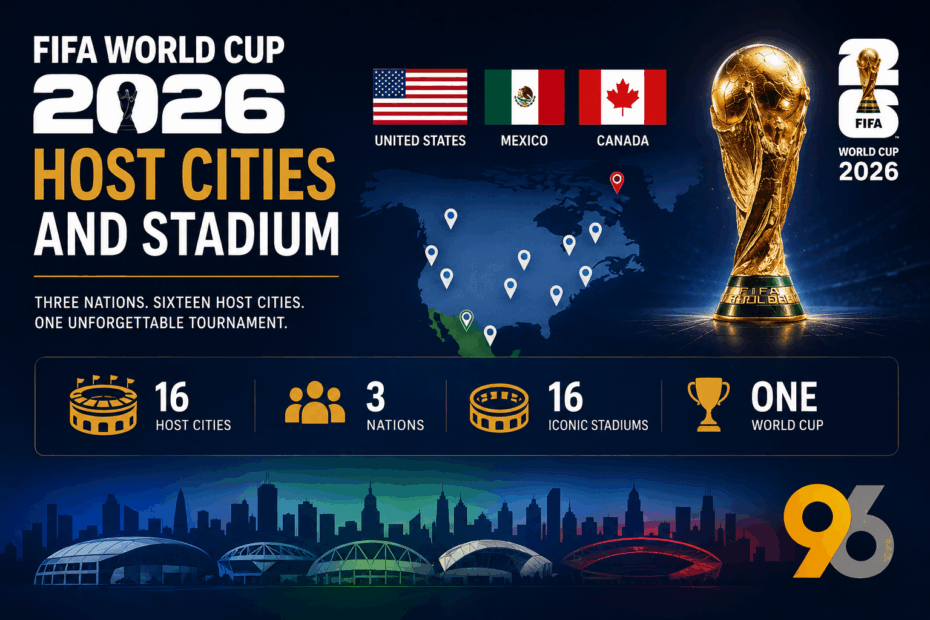
The FIFA World Cup 2026 marks a historic milestone as the first tournament featuring 48 teams across three North American nations. This expansion requires a massive logistical effort involving 16 distinct metropolitan areas to host 104 matches over several weeks of high-stakes football action. This blog on 96 game explains all the key details related to the FIFA World Cup 2026 host cities, venues, stadiums, and more.
Overview of Host City Selection
FIFA evaluated dozens of candidates based on infrastructure, transport links, and human rights standards before finalizing the 16 cities in June 2022. The selection ensures a broad geographic spread across the Atlantic, Central, and Pacific time zones to accommodate global broadcasting schedules and local fan travel.
Importance of Stadium Infrastructure
Modern stadium infrastructure is the backbone of this tournament as each venue must meet strict FIFA requirements for pitch size, VIP hospitality, and media facilities. High-quality natural grass surfaces and advanced cooling systems are essential for maintaining athlete safety and ensuring top-tier performance during the intense summer heat.
FIFA World Cup 2026 Host Cities Overview
The 2026 edition stands out because it utilizes existing world-class NFL and Liga MX venues, significantly reducing the need for new construction. These cities represent the cultural and economic hubs of North America, providing a diverse experience for international fans and local players alike.
Total Number of Host Cities
There are exactly 16 host cities designated for the tournament, distributed to provide maximum coverage of the continent. This number was increased from previous formats to handle the expanded 48-team bracket, ensuring that no single city is overwhelmed by the sheer volume of matches.
Distribution Across the USA, Canada, and Mexico
The United States leads the hosting duties with 11 cities, while Mexico provides 3 iconic locations, and Canada contributes 2 host cities. This distribution reflects the seating capacities and existing sporting infrastructure available in each nation, creating a truly continental celebration of the sport.
| Country | Number of Host Cities | Total Matches Allocated |
| USA | 11 | 78 |
| Mexico | 3 | 13 |
| Canada | 2 | 13 |
FIFA World Cup 2026 Host Cities List
The final list includes a mix of coastal giants and inland sports capitals, each offering unique atmospheres for visiting users. These cities have committed billions in local currency, exceeding 8,400,000,000 INR in total infrastructure upgrades, to welcome the world’s best football talent.
USA Host Cities
The American selection features heavyweights like New York/New Jersey, Los Angeles, and Dallas, alongside passionate sports towns like Kansas City and Seattle. Each of these 11 cities boasts massive transport hubs and extensive hotel capacity to manage the influx of millions of international football betting fans and players.
Canada Host Cities
Toronto and Vancouver serve as the Canadian anchors for the tournament, representing the east and west coasts of the country. Both cities have professional soccer pedigrees and are currently upgrading their facilities to meet the 45,000 minimum seating capacity required for early-round World Cup matches.
Mexico Host Cities
Mexico City, Monterrey, and Guadalajara return to the World Cup stage, bringing unmatched football heritage to the 2026 event. These cities are famous for their loud and loyal fan bases, and they will host significant group stage matches that celebrate the rich history of Mexican football.
FIFA World Cup 2026 Stadiums Overview
Every stadium selected for this tournament is an architectural marvel capable of holding tens of thousands of spectators in climate-controlled environments. These venues are primarily home to NFL teams or major Mexican clubs, ensuring they are already equipped with the latest broadcast technology and luxury seating.
Total Stadiums Selected
FIFA confirmed 16 stadiums for the 2026 event, with each venue undergoing specific renovations to install temporary natural grass over synthetic turf. These grounds provide a combined seating capacity that exceeds 1,000,000 seats per match day, making this the most attended World Cup in history.
Stadium Distribution by Country
- USA: Atlanta, Boston, Dallas, Houston, Kansas City, Los Angeles, Miami, New York/New Jersey, Philadelphia, San Francisco, Seattle.
- Mexico: Mexico City, Guadalajara, Monterrey.
- Canada: Toronto, Vancouver.
Major Stadiums Hosting Key Matches
The most significant fixtures of the tournament, including the opening match and the final, are assigned to venues with the highest historical significance and capacity. These stadiums will see the highest concentration of media coverage and global viewership as the tournament reaches its business end.
Stadiums for Opening Match
The iconic Estadio Azteca in Mexico City will host the opening match, making it the first stadium to host three World Cup openers. This historic venue has a storied past and remains a fortress for Mexican football, providing a perfect backdrop for the tournament kickoff on June 11, 2026.
Stadiums for Knockout Matches
Knockout rounds will predominantly take place in larger US venues like AT&T Stadium in Dallas and Mercedes-Benz Stadium in Atlanta. These venues offer retractable roofs and massive video boards, ensuring that high-stakes matches are played in perfect conditions regardless of the external weather.
| Stadium Name | City | Capacity | Primary Use |
| MetLife Stadium | New York/NJ | 82,500 | NFL |
| Estadio Azteca | Mexico City | 87,523 | Liga MX |
| AT&T Stadium | Dallas | 80,000 | NFL |
| BC Place | Vancouver | 54,500 | MLS/CFL |
Final Match Stadium
MetLife Stadium in East Rutherford, New Jersey, has been officially selected to host the FIFA World Cup final on July 19, 2026. This venue sits just across the river from New York City and offers world-class facilities for the crowning of the world champion.
Stadium Capacity and Facilities
The total capacity across all 16 venues is unprecedented, with most stadiums averaging over 65,000 seats per game. Fans can expect premium amenities, including high-speed Wi-Fi, thousands of food stalls, and massive fan zones that enhance the overall experience for every match attendee.
Largest Stadiums in the Tournament
Estadio Azteca and MetLife Stadium lead the pack in terms of pure volume, but the Dallas and Los Angeles venues offer comparable scale. These massive structures allow for ticket sales that will likely generate billions in revenue, supporting the local economies of the host regions throughout the summer.
| Rank | Stadium | Location | Capacity |
| 1 | Estadio Azteca | Mexico City | 87,500+ |
| 2 | MetLife Stadium | New York/NJ | 82,500 |
| 3 | Arrowhead Stadium | Kansas City | 76,416 |
| 4 | AT&T Stadium | Dallas | 80,000 |
Modern Features and Technology
All venues feature state-of-the-art LED lighting and 5G connectivity to support live streaming and interactive fan apps. Advanced drainage systems ensure the natural grass stays pristine, while energy-efficient cooling technologies keep the players and the crowd comfortable during the afternoon kickoffs.
Match Distribution Across Cities and Stadiums
FIFA has organized the match schedule to minimize travel for teams during the group stages by grouping host cities into regional clusters. This strategy helps players maintain their physical condition while allowing users to follow their favorite teams within a specific geographic area.
Number of Matches per City
While the exact count varies, most cities will host between 5 and 9 matches depending on their stadium size and local infrastructure. Dallas is scheduled to host the most matches of any single city, totaling 9 games, including a high-profile semi-final fixture.
Key Match Locations
- Opening Match: Estadio Azteca, Mexico City.
- USA Opener: SoFi Stadium, Los Angeles.
- Canada Opener: BMO Field, Toronto.
- The Final: MetLife Stadium, New Jersey.
Travel Between Host Cities and Stadiums
Traveling across North America requires careful planning due to the massive distances between cities like Vancouver and Mexico City. Organizers are working with major airlines and rail services to ensure smooth transitions for players and fans moving between the three host nations.
Distance and Connectivity
Major international airports serve every host city, providing direct flights that connect the Eastern and Western clusters. Fans should prepare for flight times of up to six hours when crossing the continent, though the regional group stage format aims to reduce the need for such long-distance travel.
Best Cities for Fans to Visit
Mexico City offers the deepest football culture, while New York and Los Angeles provide world-class entertainment and sightseeing opportunities outside of the matches. For those looking for a unique atmosphere, Seattle and Toronto offer incredibly passionate local soccer communities that will make every match feel like a local derby.
Conclusion: Host Cities and Stadiums Overview
The 2026 FIFA World Cup is set to be a massive spectacle that showcases the best of North American hospitality and sporting excellence. With 16 world-class host cities and stadiums ready to welcome 48 nations, the tournament will set new records for attendance and global engagement.
Players and fans alike can look forward to a seamless experience as they witness the greatest football stars compete on the grandest stage ever built for the sport. Catch 96 APK for all the updates related to this epic FIFA World Cup 2026 season through out and enjoy unlimited action of football.
