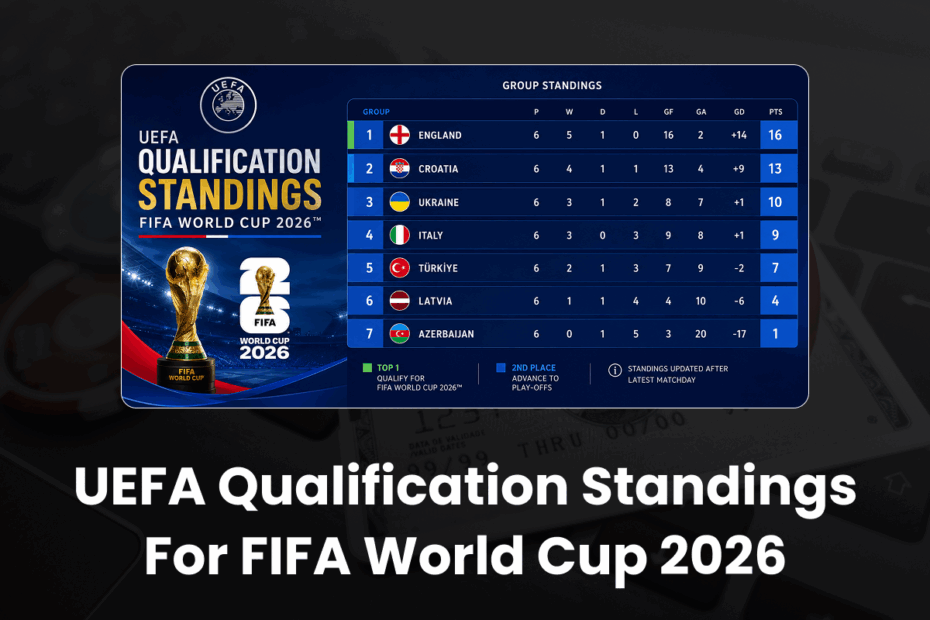
Football fans enjoyed an exciting journey as European teams battled for spots in the 2026 FIFA World Cup. UEFA secured 16 places in the expanded 48-team tournament hosted by Canada, Mexico and the United States. Players delivered strong performances across groups and playoffs from March 2025 to March 2026. The campaign produced clear leaders and dramatic playoff moments that decided the final berths.
Overview of UEFA World Cup 2026 Qualification
The UEFA World Cup 2026 Qualification brought thrilling action and surprises. 12 groups featured intense home-and-away matches. Group winners earned direct qualification, while runners-up and selected Nations League sides competed in playoffs for the remaining spots. In total, 16 strong European teams advanced.
Users can now review how favorites and emerging nations performed throughout this long campaign. 96 game delivers clear insights into every stage of these battles. Canada and Mexico’s role in FIFA World Cup 2026 highlights how these host nations are preparing for the qualified teams.
How UEFA Qualification Format Works
The format rewarded consistency with six groups of four teams and six groups of five. Each side played every other team home and away. The top team in each group booked a direct ticket to the finals. Runners-up plus four best Nations League group winners who did not finish in the top two entered the playoffs. These 16 teams formed four paths with semifinals and finals in March 2026. This structure created more opportunities while keeping high standards. Players fought hard in every match to secure their dreams.
UEFA Qualification Groups and Structure
The December 2024 draw produced competitive groups using FIFA rankings and other criteria. Five-team groups started in March 2025, while four-team groups began later in September 2025. This schedule respected Nations League dates and winter conditions in some countries. Restrictions prevented certain matchups and supported fair play. Overall, 54 UEFA teams took part in the structured campaign that tested squad depth over many months.
Complete UEFA Qualification Standings Table
| Position | Team | Played | Wins | Draws | Losses | Goal Difference | Points |
| 1 | Germany | 6 | 5 | 0 | 1 | +13 | 15 |
| 2 | Slovakia | 6 | 4 | 0 | 2 | -2 | 12 |
| 3 | Northern Ireland | 6 | 3 | 0 | 3 | +1 | 9 |
| 4 | Luxembourg | 6 | 0 | 0 | 6 | -12 | 0 |
Group I Final Standings (Highlight)
| Position | Team | Played | Wins | Draws | Losses | Goal Difference | Points |
| 1 | Norway | 8 | 8 | 0 | 0 | +32 | 24 |
| 2 | Italy | 8 | 6 | 0 | 2 | +9 | 18 |
| 3 | Israel | 8 | 4 | 0 | 4 | -1 | 12 |
Group-by-Group Standings Breakdown
Many groups saw dominant performances. England finished with a perfect 24 points in their group of five and kept an impressive defensive record. Norway also stayed unbeaten with 24 points and scored 37 goals across eight matches. France, Spain, Croatia and others posted strong tallies with excellent goal differences. These results showed the quality gap in some sections, while others stayed competitive until late matchdays. 96 app tracks all these key numbers for users who want detailed views.
Top Teams Leading the Qualification Race
Traditional powers impressed fans with high points and positive records. Germany, France, Spain, England, the Netherlands, Norway, Belgium, Croatia and Portugal confirmed spots early in many cases. Norway stood out with a flawless campaign and record goal scoring. England remained unbeaten and conceded very few goals. Players from these teams showed class that excited supporters across Europe.
Teams in Playoff Positions
Runners-up, including Slovakia, Kosovo, Denmark, Ukraine, Turkey, the Republic of Ireland, Poland, Bosnia and Herzegovina, Italy, Wales, Albania and Czech Republic, advanced to the playoffs along with four Nations League teams. The March 2026 playoffs delivered drama with several penalty shootouts. Bosnia and Herzegovina, Sweden, Türkiye and Czechia won their paths to complete the 16 qualified teams. This stage tested nerves and rewarded teams that peaked at the right time.
Key Matches Impacting the Standings
Important fixtures shaped final positions and playoff places. Big wins against direct rivals boosted confidence and points totals. Norway and England maintained perfect records through consistent results in tough away games. Close battles in balanced groups kept fans on edge until November 2025. These matches often featured tactical masterclasses and standout individual displays from key players. 96 game highlights how specific outcomes influenced the bigger picture.
Points System and Tie-Breaker Rules
Teams collect three points for a victory and one for a draw. Ties on points use goal difference, goals scored, head-to-head records and other standard rules to decide rankings. This fair system appeared in several groups for second and lower places. Players and coaches paid close attention to every goal and result to avoid missing out on tiebreakers. The rules encourage attacking football betting while valuing defensive solidity across the campaign.
Teams Likely to Qualify from UEFA
Direct qualifiers included Germany, Switzerland, Scotland, France, Spain, Portugal, the Netherlands, Austria, Norway, Belgium, England and Croatia. Playoff winners Bosnia and Herzegovina, Czechia, Sweden and Türkiye joined them to make the full UEFA list of 16. These nations bring experience and talent to the 2026 finals.
Surprise Performances and Underdogs
Some mid-ranked teams collected valuable points against stronger opponents and created memorable upsets. These underdog teams’ UEFA qualifiers showed spirit and tactical discipline that earned respect. Certain sides gained confidence and experience that will help future campaigns. Fans love these stories because they prove that determination can challenge established order. Players from these teams became heroes in their countries through hard work.
Teams at Risk of Missing Qualification
A few big names faced pressure and entered the playoffs. Italy reached the playoff final but missed out after a penalty shootout loss to Bosnia and Herzegovina. Other established teams battled hard to secure runner-up positions. These situations tested squad strength and mental toughness during decisive weeks. Coaches made important choices that affected outcomes in tight encounters. The risk pushed players to deliver their best efforts.
UEFA Qualification Timeline and Key Dates
Five-team groups started matches in March 2025. Four-team groups joined in September 2025. The group stage ended in November 2025. Playoff semifinals happened on 26 March 2026, with finals on 31 March 2026. This schedule gave teams proper recovery time between competitions.
How UEFA Qualification Impacts World Cup 2026 Groups
The 16 qualified European teams will join hosts and sides from other continents in the finals draw. Strong European representation guarantees competitive group stages starting in June 2026. This influences seeding and potential matchups for everyone. Fans anticipate exciting clashes when these well-prepared teams meet in Canada, Mexico and the United States.
Learn more about FIFA World Cup 2026 locations and match distribution.
Predictions Based on Current Standings
Experts predicted strong showings from top seeds before the final rounds. Most favorites advanced as expected, while the playoffs added excitement. Current form, historical records and squad quality shaped realistic forecasts. Teams that performed well in qualifiers now carry positive momentum into the main event. FIFA World Cup 2026 predictions continue to evolve as preparations intensify.
Latest Updates and Changes in UEFA Standings
By May 2026, the qualification picture stands complete after the March playoffs. No further changes occurred once all matches concluded. Final standings reflect accurate points, goals and results from the entire campaign. Fans can review these tables for insights into team strengths and weaknesses. 96 APK keeps all football content updated with verified information from official sources.
Conclusion
UEFA Qualification Standings for FIFA World Cup 2026 delivered memorable football moments and confirmed 16 deserving teams. From dominant group winners like Norway and England to playoff heroes such as Bosnia and Herzegovina and Türkiye, players showed great commitment. The expanded format created more chances while maintaining competitive standards. European teams now focus on shining at the 2026 finals. Check 96 bet regularly for more football news, insights and coverage of the big tournament ahead.
