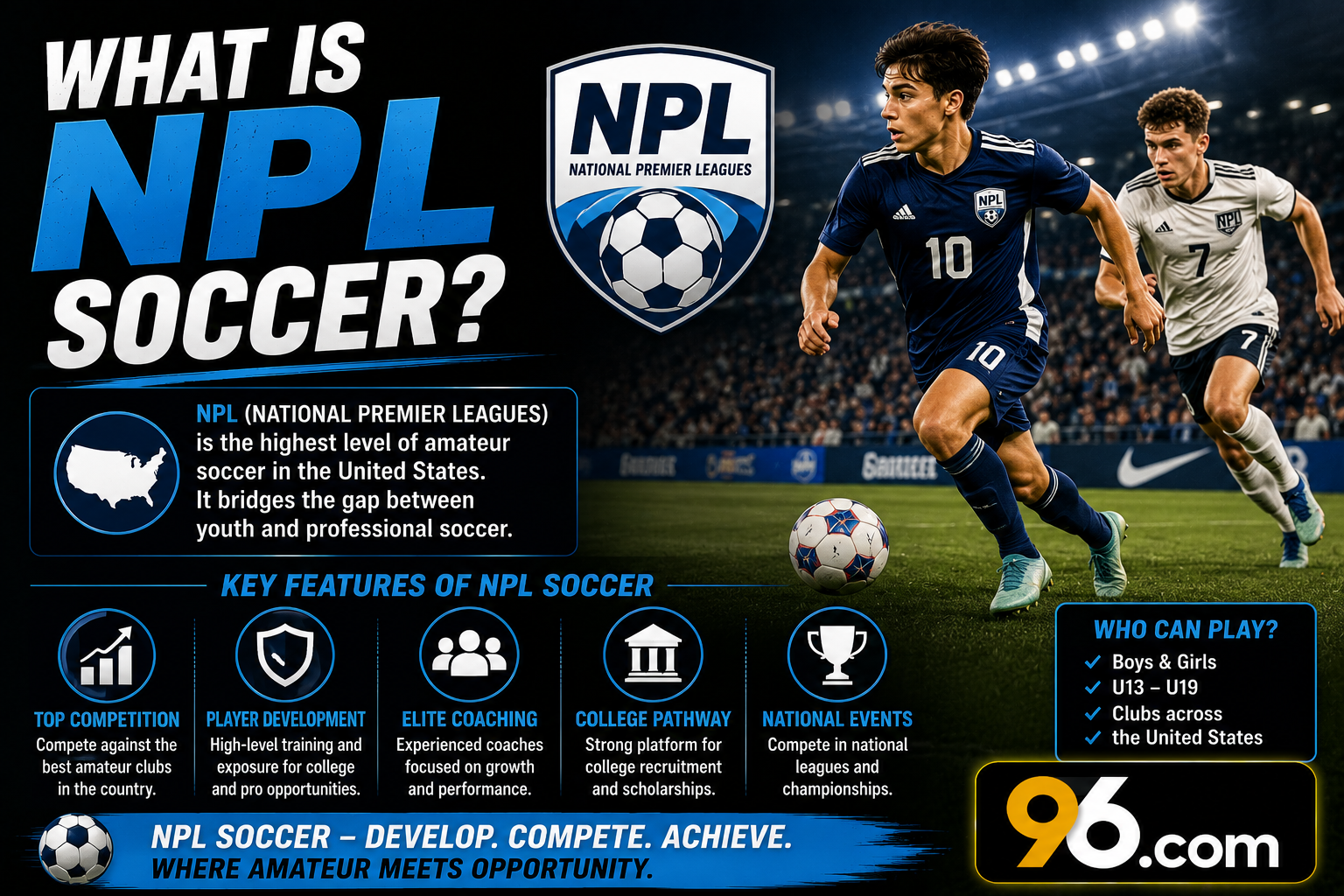
Welcome to the engine room of modern football development. If you are passionate about the beautiful game, whether you are charting player pathways, studying grassroots structures, or exploring soccer betting markets on platforms like 96 Bet, understanding the tier right below the glamorous top-flight leagues is essential.
Elite professional leagues like Major League Soccer (MLS) and the A-League often dominate global television broadcasts. However, the true talent factory lies within the National Premier Leagues (NPL) system. Let’s break down exactly how this crucial layer operates.
What Is NPL Soccer?
NPL soccer represents the critical semi-professional and elite youth layer of the football pyramid. It bridges the massive gap between local amateur parks and full-time professional football. This highly structured ecosystem focuses intensely on regional competitive balance and technical youth production.
For fans of football betting, the NPL serves as an excellent arena for spotting emerging talent and well-organized club structures before they break into the mainstream media spotlight.
What Does NPL Stand for in Soccer?
Before diving into the league’s complex mechanics, it is essential to define its core acronym and identify exactly where this competitive framework is used globally.
Meaning of National Premier Leagues
NPL stands for National Premier Leagues. While the word National appears in the title, it functions primarily as a unified network of state- or regional-level leagues operating under a single national regulatory umbrella.
Countries Where the NPL System Is Used
The NPL nomenclature and system are most famously utilized by Australia (governed by Football Australia) and the United States (via US Club Soccer).
- Australia: Launched nationwide in 2012 to unify the state leagues directly beneath the A-League.
- United States: Focuses strictly on a high-level youth development national platform.
How the NPL Soccer System Works
Understanding the day-to-day operations of the NPL requires a look at its divisions, structural regulations, and the unique math behind its squad selections.
League Structure and Divisions
The layout below illustrates how a standard adult senior NPL ecosystem operates within a global football pyramid, using the highly structured Australian format as a primary example:
| Tier Level | League Name | Contract Status | Promotion/Relegation |
| Tier 1 | A-League Men/Women | Fully Professional | Closed League (No Relegation) |
| Tier 2 | NPL Division 1 (State Level) | Semi-Professional / Amateur | Yes (Down to NPL 2 / Up to Tier 2) |
| Tier 3 | NPL Division 2 (State Level) | Semi-Professional / Amateur | Yes (Up to NPL 1 / Down to State Leagues) |
Clubs and Regional Competitions
Clubs must satisfy strict licensing criteria regarding coaching qualifications, medical staff, and stadium facilities to participate. Because traveling across vast countries like Australia or the US is financially taxing for semi-professional teams, the NPL divides competitions by region or state (e.g., NPL Victoria, NPL New South Wales). At the end of the regular season, top teams battle in local finals.
Pathway for Young Players
The absolute cornerstone of the NPL structure is youth progression. In Australia, leagues enforce a strict Player Points System (PPS).
- Senior matchday rosters are capped at a specific point total (e.g., 200 points).
- Homegrown youth players cost fewer points.
- Signing older external veterans costs significantly more points.
This mathematically incentivizes clubs to field academy products in senior squads. For analysts looking at defensive metrics and wondering what does GA mean in soccer, tracking these young defensive prospects provides great insight into how a team limits their goals against over a season.
Why NPL Soccer Is Important for Player Development
The NPL is not just another amateur league; it serves as a highly competitive incubator designed to prepare elite athletes for the highest levels of global football.
Exposure to Professional Scouts
Top-tier pro clubs and international talent hunters routinely monitor NPL games. Since NPL games are heavily recorded and digitized, data-driven scout models and live talent spotters can easily flag standout statistics.
Competitive Environment for Youth Players
Unlike standard school, recreational leagues, or indoor variants like what is futsal soccer, youth NPL players experience a highly pressurized environment. They must fight for promotion, avoid relegation, and learn the tactical disciplines required in senior football.
Transition From Amateur to Professional Soccer
Stepping from under-18 amateur soccer straight into a top-flight professional environment can cause psychological and physical burnout. The NPL drops 17- to 20-year-old prospects directly into physical senior matches against grown men and seasoned semi-pros, significantly smoothing their transition.
NPL Soccer vs Professional Soccer Leagues
To fully grasp the unique environment of the NPL, it helps to compare its competition level, financial landscape, and stadium atmospheres directly with those of fully professional divisions.
Main Differences in Competition Level
Professional leagues feature global marquee icons, massive transfer budgets, and full-time athletes who train twice a day. NPL rosters consist mostly of part-time players balancing football with day jobs or university studies. While tactical execution and pace are noticeably faster in pro leagues, NPL matches are notoriously physical, high-scoring, and unpredictable.
Opportunities for Semi-Professional Players
The NPL is a saving grace for athletes who missed out on professional academy selections early in life. It allows semi-professional players to earn stable secondary incomes through match day bonuses and small contracts while keeping their professional aspirations alive.
Fan Following and Match Atmosphere
While professional matches gather tens of thousands of fans in giant commercial stadiums, NPL matches offer a raw, grassroots community environment. Matches are played in smaller regional grounds where a few thousand die-hard local supporters generate a uniquely intense, up-close match atmosphere.
Who Usually Plays in NPL Soccer?
An NPL locker room is a unique melting pot, typically composed of three distinct generations and profiles of highly motivated football players.
- Academy Players: Elite youth prospects aged 16–20 who are contracted to professional parent clubs but loaned out to accumulate vital senior minutes.
- Semi-Professional Athletes: Experienced local veterans who have solid corporate day jobs but possess the high-level technical skill required to compete at a state level.
- Young Talents Preparing for Higher Levels: Unsigned hidden gems using the league as a shop window to attract international scouts or professional trial offers.
Benefits of Joining an NPL Soccer Club
For an ambitious player, choosing an NPL club over a standard local team unlocks superior structural advantages that can entirely reshape their career trajectory.
Better Coaching and Facilities
To secure an NPL operating license, clubs must field coaches holding advanced continental tactical badges (such as UEFA or AFC B/A Licenses). Players gain access to professional-grade sports science, video analysis, and superior training pitches.
Higher Match Experience
Playing 25 to 30 highly intense matches a season against deeply disciplined tactical setups equips players with massive situational intelligence that casual amateur environments simply cannot replicate.
Career Growth Opportunities
The table below highlights the direct upward paths available to an ambitious individual operating within the NPL framework:
| Current Status | Target Progression | Primary Catalyst |
| NPL Under-18 Player | Senior NPL Roster | Consistent execution of tactical principles & physical development. |
| Senior NPL Player | First-Tier Pro Contract | Strong performances in national cup tournaments & scout tracking. |
| NPL Club Coach | Professional Academy Coach | Maintaining a high win percentage and documenting player graduation rates. |
Conclusion
The National Premier Leagues (NPL) system serves as the foundational backbone of football culture and talent generation. By striking a precise balance between strict club licensing, localized community passion, and mandatory youth minutes, it ensures the global conveyor belt of football talent never stops moving.
Whether you are assessing team form for your next analytical project, exploring structural options on the 96 APK, or tracking the rise of the next breakthrough striker, keeping your eyes on the NPL is the smartest play you can make for the best football betting odds.
FAQs
What does NPL stand for in soccer?
NPL stands for National Premier Leagues, representing elite semi-professional and youth development tiers.
Is NPL soccer professional?
No, it is primarily semi-professional or amateur, bridging the gap from grassroots paths to full-time pro leagues.
Can players move from NPL to professional leagues?
Yes, outstanding performers are regularly scouted and signed directly by top-tier professional clubs.
Which countries use the NPL soccer system?
Australia uses it for senior state leagues; the USA uses it for youth platforms.
Why is NPL important for young soccer players?
It provides elite coaching, high-intensity matches, and vital exposure to professional talent scouts.
