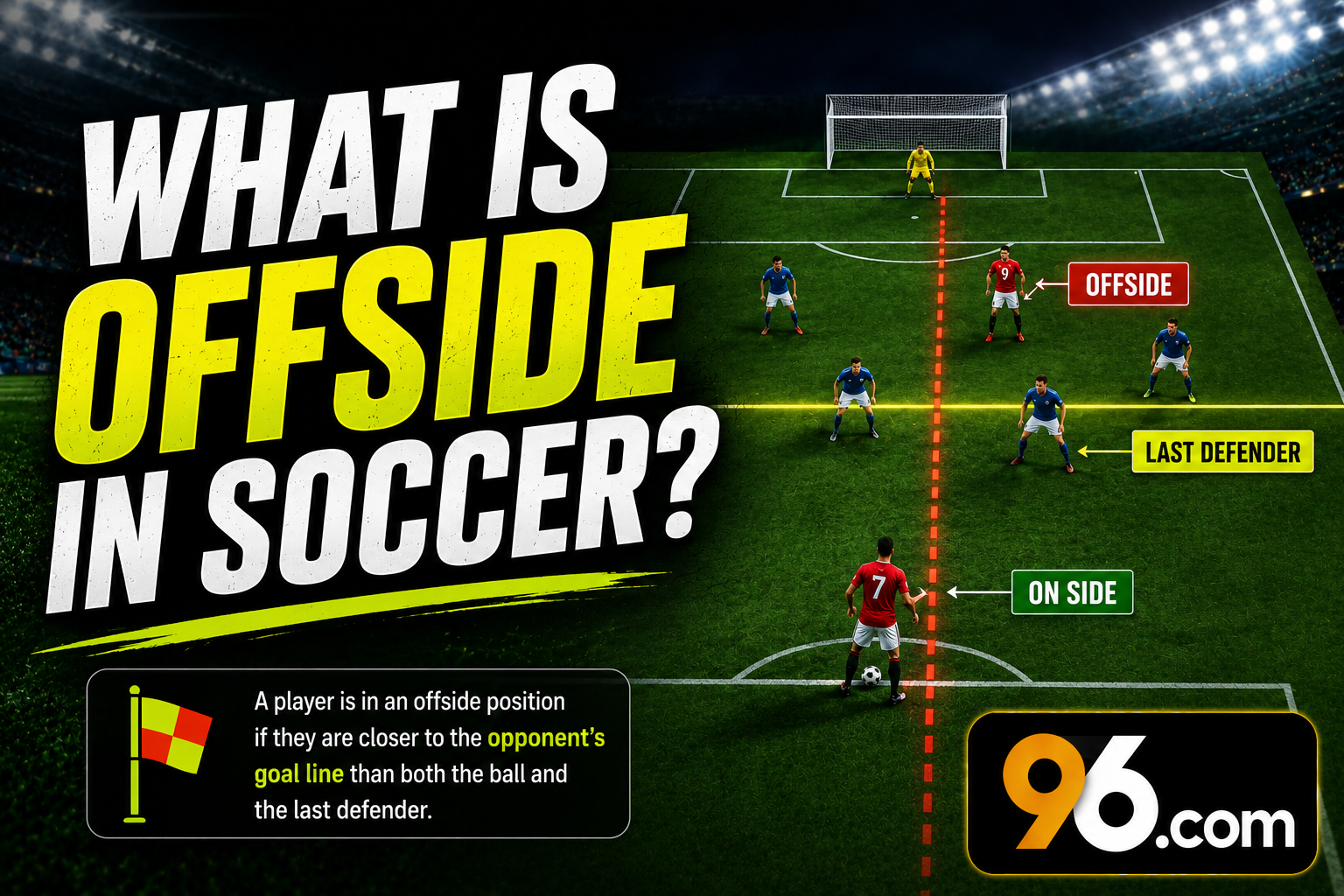
If you have ever watched a soccer match and wondered why the referee blew the whistle just as a player scored a beautiful goal, you have probably met the offside rule.
It is famous for being the most confusing rule in the sport. However, once you understand a few basic ideas, it is actually quite simple. Whether you are watching a game for fun at home, checking out the match odds on 96 Bet, or learning how the game works for the very first time, figuring out offside is your golden ticket to truly enjoying soccer betting tips.
Let’s break it down in plain, friendly English so you can feel like an expert during the next big match.
Why the Offside Rule Exists
Without the offside rule, soccer would look completely different, and frankly, it would be incredibly boring to watch. The rule exists to keep the game active, fair, and fun for everyone.
Preventing Goal Hanging
Before this rule was invented, attacking players realized they could win easily by doing almost nothing. They would simply stand right next to the opponent’s goal box and wait for a teammate to kick a long ball all the way down the field to them. This lazy tactic is called goal hanging or cherry-picking. It required zero skill, stopped the flow of the game, and made matches very dull to watch.
Keeping the Game Fair and Competitive
The offside rule forces players to run up and down the pitch together. It turns soccer into a true test of passing, speed, and teamwork. Because of this rule, attackers cannot just camp out near the net. They have to use smart timing, quick thinking, and creative plays to beat the defense. It keeps both teams working hard for the full 90 minutes.
When Is a Player Actually Offside?
To see if a player is offside, you only need to look at three simple things. The most important trick is to look at where everyone is standing at the exact moment a teammate passes the ball. Let’s look at how these three parts connect.
Position of the Attacker
An attacker is in an offside position if they cross over the middle line into the opponent’s half of the field and are closer to the goal line than both the ball and the very last defender. Keep in mind that only the body parts you can legally score a goal with count. This means a player’s head, torso, and feet can be offside, but their hands and arms can never be offside.
Location of the Ball
The ball acts like a moving safety line on the field. If an attacker is behind the ball when their teammate passes it to them, they can never be offside. It does not matter where the defenders are standing. If you are behind the ball when it leaves your teammate’s foot, you are completely safe.
Role of the Second-Last Defender
This is the part that trips up most new fans. The rule states that an attacker must have two opponents between themselves and the goal line to be onside. Usually, the goalkeeper is the very last opponent on the field. This means the final regular outfield defender acts as the second-to-last defender. To stay onside, the attacker must ensure there is at least one outfield defender level with or ahead of them when the pass is made.
Situations That Result in an Offside Call
Just standing in an offside position is not against the rules. An attacker can hang out in an offside spot all day if they want to. The referee will only blow the whistle and stop the game if that player actively gets involved in the action. There are three common ways a player gets caught.
Receiving a Through Ball Behind the Defense
This is the most common offside call you will see on television. A midfielder looks up and passes a sharp ball through a gap in the defense. The team’s fast striker sprints past the defenders, grabs the ball, and scores. If the striker started running and passed that final defender before the midfielder kicked the ball, the assistant referee would immediately raise their flag.
Interfering With Play
You do not actually have to touch the ball to be called offside. If you are standing in an offside position and you physically block the goalkeeper’s view, or if you get in the way of a defender who is trying to reach the ball, you are interfering with the play. Even if the ball flies directly into the net without touching you, the goal will be canceled.
Gaining an Advantage From an Offside Position
Imagine your teammate takes a massive shot from far away. The ball hits the crossbar and bounces right to your feet. If you were standing in an offside position at the exact microsecond your teammate took that original shot, you cannot simply tap the ball into the net. You will be penalized for using an unfair position to get an advantage.
Cases Where a Player Is NOT Offside
There are a few special moments in a game where the offside rule completely turns off. Knowing these exceptions is incredibly helpful if you enjoy sports analysis or football betting.
| Match Situation | Is the Player Offside? | The Rule in Simple Terms |
| Goal Kick | No | You can stand as close to the opposing goal as you want. |
| Throw-In | No | You can stand behind the defense to catch a throw. |
| Corner Kick | No | The ball is already at the very edge of the field. |
| Your Own Half | No | You can never be offside if you stay on your side. |
Receiving the Ball From a Goal Kick
When a team gets a goal kick, their goalie kicks the ball deep into the opponent’s territory. During this specific restart, the offside rule does not apply. An attacker can stand right next to the opponent’s net, receive the long kick directly, and legally pass or shoot.
Throw-Ins and Corner Kicks
You can never be called offside if you receive the ball directly from a standard sideline throw-in. The same goes for corner kicks. Because a corner kick is taken from the very edge of the field, the ball is technically ahead of all the players anyway, making it impossible to be offside.
Being Behind the Ball When It Is Played
Imagine two attackers break past the entire defense and find themselves in a two-on-one situation against the goalie. The player with the ball can easily pass it sideways or backward to their teammate. As long as the receiving player stays behind the line of the ball when the pass is made, it is perfectly legal.
Common Offside Scenarios Explained
Let’s look at how these rules translate to real-world action on the grass.
A Simple Example for Beginners
Think of the offside rule like a running race with a strict starting gun. The attacker and the defender are standing side by side on the field. The midfielder is getting ready to kick the ball. If the attacker starts sprinting after the midfielder kicks the ball, they are completely fine. However, if they get a head start and cross past the defender before the kick, they have broken the rule.
Tight Offside Decisions
Modern soccer players are incredibly fast athletes. Linesmen have to watch both the person kicking the ball and the last defender at the same split second. Because the human eye can focus on only one thing at a time, making these calls under intense pressure is incredibly difficult.
Why Fans Often Disagree With Calls
Depending on where you sit in a massive stadium, your viewing angle can trick your brain. This optical illusion makes a player look perfectly onside when they were actually a foot offside. This is why you will always hear loud arguments and boos in the stadium stands during a close call!
How VAR Changed Offside Decisions
Technology has completely shifted how modern soccer works, bringing a high level of mathematical precision to the sport.
Video Reviews and Offside Lines
The Video Assistant Referee (VAR) uses advanced computers and high-tech stadium cameras to review plays. When a goal is scored, the VAR team stops the game and draws perfectly straight, pixel-accurate lines on a video screen to see exactly where the players’ feet and shoulders were positioned.
Benefits and Controversies
While VAR prevents major mistakes and keeps the game honest, many fans still dislike it. It can take two or three minutes for officials to check a single play, which completely kills the fun and instant excitement of celebrating a beautiful goal with the crowd.
Marginal Offside Calls in Modern Soccer
In modern leagues, we now see goals canceled because an attacker’s big toe, knee, or armpit was an inch ahead of the defender. It is incredibly strict, and it has forced teams to change how they plan their attacking plays.
Forwards and the Offside Trap
To truly appreciate the game, you have to look at the ongoing mental chess match between defense and offense.
When exploring what is a forward in soccer, think of them as the team’s primary weapon. So, what do forwards do in soccer to help their team win? Their main job is to score goals by breaking through the opponent’s backline.
To beat the offside rule, elite forwards use smart visual tricks. Instead of running in a straight line, they will make curved or diagonal runs. This keeps them moving sideways until the exact moment the ball is passed, allowing them to explode forward into open space with perfect timing.
Why Timing Runs Is So Important
A forward must be in perfect harmony with their midfielders. If they launch their run even half a second too early, the assistant referee blows the whistle, and the play dies. If they run half a second too late, the defender will easily step in and steal the ball away.
Teams Known for Using the Offside Trap
The offside trap is a clever defensive trick. Instead of running back to chase a forward, the entire line of defenders steps forward in unison right before the ball is passed. This instantly leaves the attacking forward stranded all alone in an offside position. Teams like Liverpool and Barcelona have famously mastered this high-risk, high-reward strategy.
Offside Rule Myths and Misunderstandings
Even experienced fans who use sports platforms or download the 96 APK app can still get confused by a few common soccer myths. Let’s clear up three of the biggest ones.
- Myth 1: Standing past the last defender is always offside. This is false. You can stand right next to the opponent’s goalkeeper all game if you want to, as long as your team does not pass the ball to you or involve you in the play.
- Myth 2: You can be offside anywhere on the field. No, you cannot. You can never be called offside if you are standing inside your own team’s half of the field when the ball is kicked.
- Myth 3: You have to touch the ball to be offside. As we mentioned earlier, if you run toward the ball and distract a defender or block the goalie’s view, you will be called offside even if your boots never actually touch the leather.
Everyday Soccer Contexts
To get a true feel for how professional soccer works, it helps to understand how teams prepare during the week and how match timing behaves on game day.
When professional clubs train, they do not just play random, casual games. They use structured practice games to build their habits. What Is a Soccer Scrimmage? It is an informal practice match played between teammates. Coaches use these scrimmages to test out new strategies, refine the timing of their defensive offside trap, and help their forwards practice breaking past defenders without getting penalized.
While playing these games, managing the stadium clock is just as important as managing your field position. How Does Soccer Time Work? Unlike American sports, where the clock stops every time play halts, soccer uses a continuous 90-minute clock that keeps running no matter what. The game is split into two 45-minute halves. To make up for time lost due to player injuries, substitutions, or lengthy VAR offside reviews, the main referee adds a few extra minutes of stoppage time to the very end of each half.
Conclusion
While the offside rule might seem a bit annoying and tricky when you first start watching soccer, it is actually what makes the sport so beautiful. It stops teams from taking lazy shortcuts and forces them to rely on genuine skill, athletic speed, and beautiful passing combinations.
Whether you are exploring soccer betting markets or simply enjoying a weekend match on the couch with your friends, you now know exactly why that assistant referee is waving their flag!
FAQs
What is offside in soccer?
An attacker is offside if they pass the last defender before the ball is kicked.
How does the offside rule work?
The referee blows the whistle if an offside player gets involved in the active play.
Can a player be offside from a corner kick?
No, you can never be called offside directly from a standard corner kick play.
Why is offside one of the most confusing rules in soccer?
Because referees must watch the passer and the moving defenders at the same split-second.
How does VAR determine offside decisions?
VAR uses high-tech stadium cameras and digital lines to check positions down to the millimeter.
